And the Winner is…

You will have to be at our Third Annual Audience Choice Concert on June 1 to find out!

What is an Audience Choice Concert you ask? It’s a concert where the audience has chosen the music that we will be performing.

How did the Audience choose the music? At all of our concerts for this season (since September of 2011) the audience has been asked to vote for their favorite piece on the program. We have a blast reading the comments and finding out what our audience thinks about the music we choose to play! We always expect the big standards to win by a landslide (Mozart, Beethoven etc) but often they don’t! Every piece on each program always receives a few votes, and we often have two that tie for first place.

Why did you start an Audience Choice Concert? From the very beginning, we’ve been focused on breaking down the “wall” between audience and performer. We had some pretty crazy ideas about how to go about this – and this was one of them! It’s proven to be our most popular concert of the year two years in a row, and we’re really excited about this year! We’ve got 10 of the best musicians in the area all in one concert!

Any hints about what we might hear on Friday? Well, we can’t give it away, but we can tell you the concert starts with a beautiful tune, moves into some dramatic material, has an interlude of pure elegance, and ends with the most playful and joyful piece of music you can find! It’s going to be really fun!

Who are these 10 musicians who will be playing? If we told you that, some of our pieces would be revealed, at least to the close observer of what we’ve been doing. But, we can tell you that we are thrilled that Laura Reycraft will be back with us after a break this spring (she had a baby!) All of our Core Members will be there, including the always fabulous Nina Ferrigno on piano, plus a great bass player we’re excited to be working with for the first time! And you’ll have to show up to find out more than that!

Where and When? 

The Chapel Venue – a sanctuary for the arts
Friday, June 1, 2012  8:00pm
6238 Alexander Drive -63105 (Behind Memorial Presbyterian Church)
$12 regular/$4 students – includes two beverages
free street parking
click here for a Google Map

To read more about what we do at The Chapel – click here

Jen and Laura at The Chapel

Jen and Laura performing at The Chapel. Photo by Brandon Krepel.

Meet Hannah

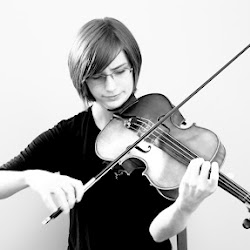
Hi everybody.  I’m Hannah and I play the violin.  The group asked me to write a blog entry about myself, and even though I write my own blog about myself all the time, I am having a hard time figuring out what to write about here—

Playing violin with Chamber Project St. Louis has been such a fun experience!  Let me tell you how my lifelong journey with the violin has led me here.

I started playing violin at the age of 5 using the Suzuki Method.  If you aren’t familiar with the Suzuki Method, the concept is that one can learn to play a musical instrument the same way one learns a language—starting young, listening to the music, repeating familiar songs (words), and with active parental involvement and positive reinforcement.  I loved played the violin, but mostly I loved playing the violin with other people, an opportunity I had in Suzuki group lessons.

 HannahChristmas 1983

(And FOR other people too!)

As I grew up and continued to play, I became more serious about music, and found great joy (while having a lot of fun!) collaborating with other musicians.  My first love was orchestra.  I played in the Carolina Youth Symphony for many years, and looked forward to the weekly rehearsals.  I loved the camaraderie of playing in a large group, and was inspired by how the entirety of the orchestra—the collective sound, the togetherness of the experience—was (cliché ahead!) truly greater than the sum of the individual parts.

As far as chamber music went, my only real experience until I got to late high school was playing duets with my sister Leslie, who is also a violinist.  As I grew older and more experienced,  I learned that playing chamber music with people who are not related to you is different than playing with your sister.  You see, with those pesky non-relatives you have to be nicer and more diplomatic, and “because I’m older” is generally not an acceptable reason to do things your way.  However, it is less likely that your fellow musicians will burst into tears or threaten to “tell mom”, so that’s a definite bonus!

both2 

(Performing with Leslie on one of her graduate recitals)

Anyway, by the time I got to high school I knew I wanted to go into music for a living.  My goal was to become a violinist in a major symphony orchestra.  Since I had so far pretty much achieved every goal I set my mind to I didn’t see any reason why I wouldn’t achieve that goal as well.  I went to the Cleveland Institute of Music for college, and stayed there for graduate school as well.  During that time I practiced hard, had many amazing orchestral and chamber music experiences, and, well, met my husband, Chris.  I also began to realize how difficult it was to get a job in a symphony orchestra.

31736_432978236549_697061549_6092858_7695468_n 

(Me, playing the violin a couple of years ago…at a wedding!)

Nonetheless I wasn’t going to let that challenge stop me.  I won my first (and probably last) symphony job right out of school and moved to North Carolina to play with the Charlotte Symphony.  I had done it—I had realized my dream!  I was on the cusp of my new life and career as a professional orchestral musician and couldn’t wait for the future.  But the future wouldn’t turn out quite as I thought (does it ever?)  After playing a couple of seasons with the orchestra, I just wasn’t…happy—I realized that professional achievement doesn’t automatically bring about personal fulfillment, and, frankly, I was miserable without Chris nearby.  I left after a couple of years to return to Ohio to freelance and teach.  Chris did a variety of different things, and then ultimately we decided to move to St Louis so he could play with the Symphony here. 

That didn’t leave much for me to do, unfortunately, so when the ladies of Chamber Project asked me to play a concert with them the other year, I jumped on it!  After enduring a couple of years devoid of chamber music, it was a lifesaver.  Not only are they all delightful people and friends, they are wonderful to work with and fun to make music with.  I’ve learned so much from everyone and from playing with Chamber Project, not just musically, but in terms of engaging the audience, public speaking, and all kinds of administrative-type stuff that goes into running a chamber music group.  It’s been great, and I’m honored to be a part of it.

IMG_1937

(after our March concert at the Wine Press)

It’s funny how life surprises you.  If you’d asked 16 year old Hannah if she thought she’d follow a man to a city where she didn’t have any work she would have smacked you.  If you’d asked that same Hannah if she thought she’d love playing chamber music with a bunch of women who had a chamber music project and a dream, she would have laughed in your face.  But here I am, and all I know is that each year just keeps getting better. 

IMG_1977

(Warming up for a performance in April)

I hope you can join us for our Audience Choice Concert on June 1 at 8 pm at the Chapel.  I’ll be playing!

Nina’s Musical Cocktail Party

Our pianist, Nina Ferrigno, shares what it is she loves about chamber music, and the many paths it has lead her down! You can hear Nina with Chamber Project on June 1 at our Third Annual Audience Choice Concert!

Amongst your classical musicians, pianists definitely have a superiority complex.  Being a pianist myself, I’ll not bore you here with all the many reasons why this is totally justified, but just think of a pianist’s brain!  Reading two clefs at the same time, two hands working independently, ten fingers playing twelve-note chords (thanks, Messaien)!  Add this to the multitudinous hours spent alone in a practice room perfecting the ability to handle it all, the muscle, the power, the inexplicable delicacy, dexterity and grace, it’s amazing we keep it in check at all!  I missed a lot of social gatherings growing up.  I was practicing.  It’s OK, I think that helped me avoid being a victim of “mean girl” syndrome in high school (New Hampshire can be brutal.  It’s not all fall foliage and snow…).  But I consider myself a social creature so imagine my joy at discovering CHAMBER MUSIC at age 13.

To me, chamber music is like playing a mini-concerto and having a non-stop musical cocktail party all at the same time.  I get to “talk” a lot (I’m good at that) through my instrument and I get to listen to others “talk” through theirs.  During rehearsals I love this non-verbal communication followed by the “what just happened there” questions and ensuing discussions as to whether we really meant it!  Leading up to the performance these are such important discussions as we build trust as an ensemble and lay the groundwork that allows us to throw most of that plan out the window while on stage.  I don’t improvise notes like a jazz musician but chamber music performances are a kind of improvisation.  Everyone’s unique musical personality shines through the give and take of musical expression in each piece played.  Every performance is different, every rehearsal different.  This kind of playing really keeps my ears open and I love adapting to the moment!

Nina and Jen

Nina and Jen at one of our very first concerts! It is at times difficult to keep the “conversation” purely musical in rehearsals sometimes!

As a pianist, I seek out new experiences in chamber music all the time.  Along with Jennifer Lucht, cello, and Catherine French, violin,  I formed the Boston-based Calyx Piano Trio in 2001.  Simply stated, we have a great time playing together!  The trio repertoire is second to none and really exemplifies the spirit of partnership while maintaining the solo identities of each member.  Since moving to St. Louis in 2007 I have appeared regularly with Chamber Project St. Louis and love the interesting pieces the flexible instrumentation of our ensemble provides us!  Sometimes we are really challenged by poor pianos in our venues, but as we move forward we are committed to finding instruments worthy of our artistic output!  In many ways some of the extra demands placed on us while dealing with less-than-ideal pianos have yielded some of our most interesting and connected performances!  Yeah, CHAMBER MUSIC!

My love of chamber music has also lead me to starting the Missouri Chamber Music Festival, (www.mochambermusic.org) with Scott Andrews, clarinet (husband and partner in every way).  Concerts June 21-23, 2012 in Webster Groves mark our second season and we are thrilled with how the creation of this Festival has lead to some of the most inspired classical music performances of the St. Louis concert season!  We bring musicians in from all around the country to take up residence in Webster rehearse with fabulous musicians from St. Louis and create some incredible performances as a result.   We also run the MOCM  ProAm Chamber Music Intensive which is for adult amateur chamber musicians.  Over a workshop weekend we put groups together, take over the Community Music School building of Webster University and throw ourselves into chamber music.  We have doubled our enrollment this second year!  It has totally added to the “non-stop musical cocktail party” feeling chamber music instills in me!

Gods on the Ceiling

What do our musicians think about the music for our concert on Friday April 13? Read on to get the inside scoop on this program with the mystery name, “Gods on the Ceiling.” If there is a music word you don’t understand, we have a short dictionary at the end of the post.

PROGRAM
Cherubs on the Ceiling by Paul Hayden
Duo No. 2 by Bohuslav Martinu
Adria by Christain Lauba
Clarinet Quintet by Johannes Brahms

MUSICIANS
Hannah Frey, violin
Elizabeth Ramos, violin
Chris Tantillo, viola
Valentina Takova, cello
Dana Hotle, clarinet
Michael Holmes, saxophone
Adrianne Honnold, saxophone

First, we hear from our guest saxophonist, Michael Holmes. He joins us from Champaign Urbana, Illinois. 

Michael: Adria, written in 1985, is a very intricate piece that features many idiomatic compositional techniques specific to the saxophone. The composer, Christian Lauba, is well known for his avant-garde saxophone compositions. Lauba tends to explore many extended techniques, wide ranges of dynamics, and extended ranges of the saxophone in his compositions… this is certainly showcased in Adria. This composition, for two saxophones, is said to evoke the sounds of the Adriatic River which is sometimes tranquil and at other times agitated.

I think that a good composition has two primary objectives: tension and release. Adria certainly incorporates both of these objectives, and there are few moments that are extremely successful during the composition. My favorite moments of the piece are  when the composer asks both of the saxophonists to play at extraordinarily soft dynamics and then creates very tight melodic lines with a hemiola (3:2) between the two parts. These moments create such a beautiful shimmer and texture… I hope that the audience enjoys them as much as I do!

adria

The sheet music for Adria - check out the instructions at the bottom!

Adrianne and I have had the great fortune to play to together in various ensembles throughout the years, but it has been many years since we have had the chance to play a duet together. I am delighted to be performing with Chamber Project St. Louis and with my dear friend Adrianne!

Next we hear from our clarinetist, Dana. 

Dana: I’ve really been looking  forward to this particular program all year. First of all, I love the name, and I love the crazy variety of music being showcased, and more than anything, I LOVE LOVE LOVE the Brahms Clarinet Quintet. I’ve been listening to the Brahms since high school. Over the years I’ve amassed more recordings than I care to admit, some of which I never even listened to until I started prepping for this concert. (A 1962 recording on vinyl by Members of the Vienna Octet, Alfred Boskovsky on clarinet, has become a favorite.)  What is it about this piece that draws people in, and not just clarinet players? Well, from a musicians standpoint, it’s quite a masterpiece – but even to the neophyte, this music can strike a deep chord. It begins with one of the most beautiful and plaintive melodies ever heard, and meanders from there into intense rhythmic exclamations, and then back and forth through a variety of emotions and intensities. There’s a rhythmic drive in this movement that I love.

brahms

The middle of the second movement - so nostalgic.

The second movement, which is incredibly difficult, is absolutely worth the effort. To me, Brahms better than anyone, can capture the feeling of nostalgia, the essence of memory, of being half asleep and half awake. This is what I love about Classical music, it can express these more subtle and complex emotions and experiences – far beyond just happiness and sadness. In this particular movement, the sense of nostalgia is so intense, it at times overwhelms me. As do the thousands of notes I have to play to pull it off. When I listen to it, I sometimes get intense color sensations (you know, that golden color that happens in the fall when the sun is setting, that color happens a lot.) When I’m playing it, I can’t really think about that at all because the music is so difficult to play with either very slow, long phrases, or the embellished, dramatic ones with too many notes!

brahms music

The second movement builds to a dramatic climax, which is technically the most difficult part for the clarinet.

The third movement is a simple tune that wanders on and on like a  beautiful spring afternoon, with a brief rainstorm in the middle –  and the last section is a theme and variations which features each instrument. The entire work is cyclical – the beautiful and plaintive melody from the beginning comes back at the very end.

Brahms wrote this near the end of his career, when he was fully a master of his craft. You can hear it in the music, that this is written by a mature man, fully confident in his art. It’s amazing really, when you look at a score and you realize that he thought about and wrote, by hand, every single note. 

brahms score

A few bars of the First Movement, just a few of thousands and thousands of notes written by Brahms.

We finished our first rehearsal just a few hours ago, and I was so stunned at the beginning of rehearsal that I was actually playing the music and not just listening to it I kept messing up!  I was also floored by how amazing our string quartet sounds!!!  You don’t want to miss this concert!

Finally, our violinist Hannah answers a few questions about the program. 

What is your favorite piece on the program and why or what do you love about the piece you are playing? I am torn between the Brahms Clarinet Quintet and the Martinu Duo.  Brahms is one of my absolute favorite composers, but (sorry Dana!) the [Brahms] Violin Sonatas are my first love.  Quintets are tough for a self centered violinist like me, because I have to share the spotlight more than I’d like.  Seriously though, the piece is absolutely genius, but I almost more prefer listening than playing (and yes, it’s been on in my car for the past several weeks!).  The Martinu on the other hand is so much fun to play.  I’ve already performed it in March with Laura, and I’m really looking forward to playing it again.

What is the most challenging aspect of this program?  Well, playing Brahms well is a weakness of mine.  Perhaps it’s a weakness for everyone…when he writes sotto voce I always freak out because I feel like a gorgeous soft sound is just hard to do.  I’m much better at loud and bombastic!  The other really challenging thing is this one run of octaves in the last movement of the Martinu.  It’s one of the most difficult technical passages I’ve had to play in a long time, and it happens twice.  I’ve been practicing it every day, but it just never sounds the way it should.  (Octaves, meaning two of the same notes, but one higher and one lower, and I have to use my first finger and my pinky finger while playing on two different strings and I have to move or shift my hand for EACH note.  Fast.)

 Is there a ‘magical moment’ for you in this music? You’ll just have to watch my face to see.  There’s a place in the Hayden when the saxophone enters and it just cracks me up, the effect is so cool. Brahms is full of magical moments, though I have a couple favorites, like I said, watch my face and you’ll know…and I love the second movement of the Martinu–it’s so dark and icy, and reminds me a lot of some of my favorite Shostakovich Symphonies.

rehearsnig at tofa

Looking into the rehearsal for Cherubs on The Ceiling from the sidewalk. At the Tavern of Fine Arts.

Any fun/interesting stories from rehearsals?  ALWAYS.   But I think it’s hard to tell a story from rehearsal in a way that is interesting to anyone else.  It’s usually one of those “you had to be there” stories… I’ll just say that it’s always a challenging experience to work with my husband Chris [Tantillo, on viola].  We are both very passionate people and don’t always work well together. We don’t play together very often, and I think sometimes it can be tough for other people to work with us.  I’m almost more excited about our Martinu [Duo for violin and viola] because we can rehearse without worrying about if our interaction makes other people uncomfortable! {Dana here: rehearsals have been great! It’s so fantastic to work with such passionate, engaged players who are pushing each other to be their best!}

Have you learned something new or interesting from studying for this concert? It’s the first time I’ve performed a piece with one player (the Martinu with Laura in March) and then had to perform it just two weeks later with a different person [Chris].  I already know how I want the piece [to sound], but the new collaboration makes me see it in a whole new light.  It’s really very fun, and one of my favorite things about music, which is also one of the things that most overwhelms me, is that there are a million right ways to turn a phrase.  I always tell my students,  ”I don’t care if you get louder or softer, or how you phrase this – really the only thing you can do wrong is to do nothing.”

MUSICAL TERMS

avant-garde: A term generally used to describe art that is outside of the real of what is considered ‘popular’. Art that pushes the boundaries of what art is. 

dynamics: The volume – how loud or soft the music is.

extended range: Refers to notes that are not considered within the everyday usage of the instrument. Usually very very high notes, but can refer to the very lowest notes on certain instruments, like saxophone and bassoon. These notes usually require unusual fingerings and are difficult to play.

hemiola: A way to use rhythm. When an even and an odd (or, two odd) amounts of notes are played within the same amount of time, within one beat. In this case, one person is playing 2 notes while the other is playing 3.

idiomatic: When the music is written in a way that fits very well with the natural abilities and strengths of the instrument it is written for.

movement: Large pieces of music are usually divided into sections, like chapters in a book. Each with its own character(s). Typically, movements are organized in groups of three or four, with the first movement being fast, the second slow, the third dance-like and the fourth also fast. In a three movement work, the dance-like section will be omitted.

phrase: Like a musical sentence – it’s a smaller section of music with a recognizable beginning, middle and end. To “turn a phrase“, how you shape the phrase, placing emphasis on some notes more than others.

score: The score contains all of the individual parts. The performers have only their own music, they don’t see what the other musicians are playing. A conductor uses a score.

sotto voce: Literally, “under voice”. To intentionally lower the volume of one’s voice to create emphasis. In music, it means to play softer in a particular way, usually with a degree of intensity. Sometimes when there are two melodies at the same time, the composer will indicate the slightly less important melody with “sotto voce” to make it clear to the musician.

theme and variation: A way to structure music, a “form”.  A melody is stated at the beginning, and the followed with variations on that theme. It’s usually easy to pick out when the different sections begin and end because they will each have a unique character.

Wine Press Concert

Reblogged from HANNAHVIOLIN:

Click to visit the original post
  • Click to visit the original post
  • Click to visit the original post
  • Click to visit the original post
  • Click to visit the original post
  • Click to visit the original post

Last night was our concert at the Wine Press that I’ve been telling you about.  I was super stressed out about it for two main reasons: I had agreed to speak about a piece, and I was playing a solo piece from memory.  However, it went fantastic (overall) and I feel SO great for having risen to the challenge.

I learned that I really love to be a comedian.  My talk was full of jokes, primarily off the cuff.  I don’t know if it was any good, but people did laugh, and honestly, I love the feeling of a room full of people laughing at me.  Wait, did that come out wrong?

Read more… 215 more words

Di you know our violinist Hannah is a blogger? She wrote a nice little post about our concert this past Friday night, with lots of pictures!

Meet Valentina

Our cellist, Valentina Takova shares her story.

Valentina at The Chapel

Valentina performing at The Chapel.

I am from Sofia, Bulgaria. My childhood experience was very different than that of the kids here in the U.S., but I like where I come from and I think I turned out OK. I started playing the cello when I was six years old, but actually my big dream was to play the violin, because my older brother, my first cousin and my aunt played the violin. So naturally, I expected to play the violin. I could not wait to start.

Well, during communism you couldn’t really choose what you want to do, and the Dean of the Sofia Music School had other plans for me. Getting in to the  school was very competitive at the time and of course, he had to make sure that all the kids of famous people got in. So even though the audition process was “official”, there was quite a bit going on behind the scenes (many of the violin positions were already filled!). He counted the open violin spots, and then he counted the kids that he “had” to accept and realizing all the violin spots were taken, assigned me the cello. Major drama ensued in our house:  my dad showed up at home with a cello in a plastic bag, I ran away from him and cried…and cried….I was supposed to play the violin…my life was over…my world was falling apart! This lasted a few days. Once the initial shock was over I got used to playing the cello, and I am so glad it turned out this way. Violin players have very hard parts with so many notes! We cello players have to keep it together in the foundation of the group, but we get to play the most beautiful and heartbreaking melodies. With so much amazingly beautiful music written for the cello, I cannot complain!

My musical training was very strict and growing up in a music school we had lots of extra subjects like music theory, music history, solfege, harmony, acoustics (and more that I can’t even remember) and of course I had cello lessons twice a week, chamber music and orchestra. I did not do much sports and most of the time while my friends were playing on the street, always whistling under my window to come out and play, I had to stay home and practice.

But now I am thankful. Because of my cello I was able to leave Bulgaria at the most difficult period, the late 1990s, get full scholarships in every school I attended, travel the world and live a life with beautiful music every day. I was able to escape the impossible task of finding a job in a post-Communist country where nothing was working right. Here in the United States I can (as Dana says) “Do what I love“, and have a life that would be impossible in my country. I love Bulgaria and I miss it every day, but I know that my cello saved me and I am grateful every day.

Inspiration

“Art forms begin to die when they become bound by tradition rather than inspired by it; when they become deaf to the shout on the street; when they grow static as contemporary life gains speed and draws away; when they  become too refined, abstract and refuse to touch the ground.” – Eddie Silva*

We couldn’t agree more. This is why we started Chamber Project. As young passionate practitioners of an old and storied art form we feel its life, vitality, and tremendous energy. We want to share this with our community – for the people and for the art form itself. We want to let people in on the depth and breadth of the emotional, intellectual and even spiritual enjoyment that Classical Music has to offer.

In a time when we are bombarded with music everywhere – at the gas station, at the grocery store, from ring tones of the person behind us in line, it seems that our ears have become less attuned and less sensitive to music. How can we, as musicians, offer music to our audience in a fresh way?  In a way that doesn’t just keep up with contemporary life, but becomes a part of it?

Inspired by the tradition of chamber music being performed in intimate social settings, we are experimenting with concert formats, and even more boldly with rehearsal formats. Opening the door for people to experience music in a personally relevant way is something we’re passionate about. So next week we offer our second Very Open Rehearsal.

Roussel Pic

Albert Roussel and his cat.

The V.O.R. is your chance to work with us as we explore music we are learning for an upcoming performance. Our first V.O.R in January was fantastic. The audience feedback during and after the event was incredible. There aren’t really any rules – we play, we rehearse, and you ask any question that comes to mind (about the music that is), and we answer it. We get feedback about what we’re doing in a truly useful way. In January, the audience helped us decide how slowly we should play the slow movement! You can watch a short video from the event at the end of this post. If you want to read a little more about what a V.O.R. is exactly you can read our post  A What? A VOR? from January.

On Wednesday March 14 Jen, Laura and Valentina will be having a Very Open Rehearsal of  Albert Roussel’s Trio in preparation for our performance at The Wine Press on March 23.

Very Open Rehearsal
Wednesday March 14, 7:00pm
The Tavern of Fine Arts
313 Belt Avenue 63112
free/free parking
all welcome

The Tavern of Fine Arts has new art on the walls this week- we can’t wait to see it, we hear it’s really amazing!

*Thanks to Eddie Silva, blogger for the St. Louis Symphony Orchestra for the inspiration for this post! The quote above was from “Celebrating The Ballets Russes” which I found in my SLSO program this weekend. You can read more of his writing on the SLSO blog. http://www.stlsymphony.org/blog/